


After the Blur shutdown, there is no single replacement, and that is the useful news. The blur.io website closed on November 12, 2026. Blur says its marketplace protocol keeps running onchain, that pre-existing bids and listings made on the site were canceled, and that a withdrawal page for Blur Pool ETH and Blend loans stays online until November 12, 2027. Where you go next depends on what you collect. For 1/1 art, SuperRare pays artists a fixed 10% royalty on resales. For generative art, Art Blocks runs its own secondary market for its projects. For PFPs and general Ethereum collecting, OpenSea charges a 1% selling fee and lets creators make royalties required or optional. For Tezos art, objkt takes a 5% seller fee and pays royalties on every sale. One former option is gone for Ethereum: Magic Eden ended its EVM marketplace on March 9, 2026 and now trades only on Solana.
This guide sorts the venues still open by the kind of collector each one serves and by how it treats creator royalties, using each platform’s own fee and royalty documentation as checked on November 13, 2026. It doesn’t rank anyone by trading volume, and it isn’t trading advice.
First, close out what is still on Blur
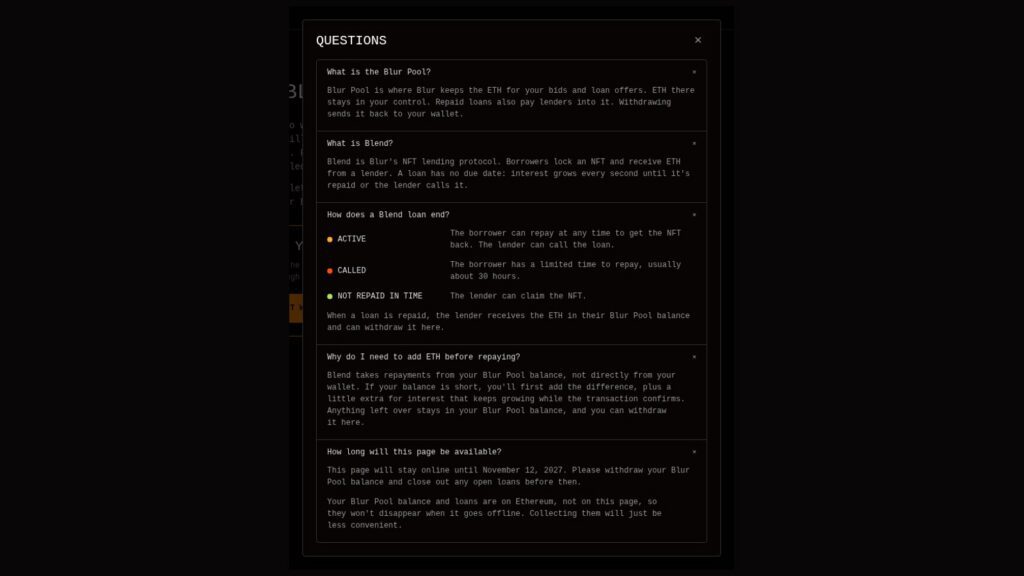
Your NFTs were never stored on Blur. They sit in your wallet and can be listed anywhere that supports their chain. What may still be tied to Blur is ETH. That includes your Blur Pool balance, which funded bids, and any NFTs or ETH locked in Blend loans. The closed blur.io site now offers a wallet lookup for both, and its FAQ says the page “will stay online until November 12, 2027.” It also notes that balances and loans live on Ethereum, so they won’t disappear when the page goes offline. Collecting them will just be “less convenient.” For every step, see our Blur shutdown checklist for NFT collectors.
After Blur shutdown: pick a venue by what you collect
Blur was built for fast trading across whole collections. Most collectors who are looking for a new home want something narrower: a place that shows the kind of work they collect and pays the artists behind it. Here is how the main venues still open compare, using their own documentation.
| Venue | Best fit | Platform fee (per its docs) | Creator royalties (per its docs) |
|---|---|---|---|
| SuperRare | 1/1 art from invited artists on Ethereum | 3% marketplace fee added on top, paid by the buyer, to the SuperRare DAO treasury | Artist receives 10% of every secondary sale. Primary sales split 85% artist, 15% DAO treasury |
| Art Blocks | Long-form generative art | Primary sales on Studio projects: 10% to Art Blocks, 90% to the artist | Up to 5% on resales, split two-thirds artist, one-third Art Blocks by default, using the ERC-2981 standard |
| OpenSea | PFPs and general collecting across Ethereum, Solana and other chains | 1% on NFT sales; 10% on primary-drop mints | Set by the creator as required or optional. Optional means the seller decides |
| objkt | Tezos 1/1 and generative art | 5% marketplace fee, paid by the seller | Deducted from every sale and paid to the creator’s set recipients |
| Magic Eden | Solana only since March 9, 2026 | 2% on transactions | Buyer can choose to honor them unless they are enforced in the collection’s metadata |
Sources: SuperRare Help Center, Art Blocks developer docs, OpenSea fees and creator earnings help pages, objkt fee structure, and Magic Eden’s service changes and fees pages, all checked November 13, 2026. Fees can change, so check the venue’s own page before you list.
If you collect 1/1 art: SuperRare
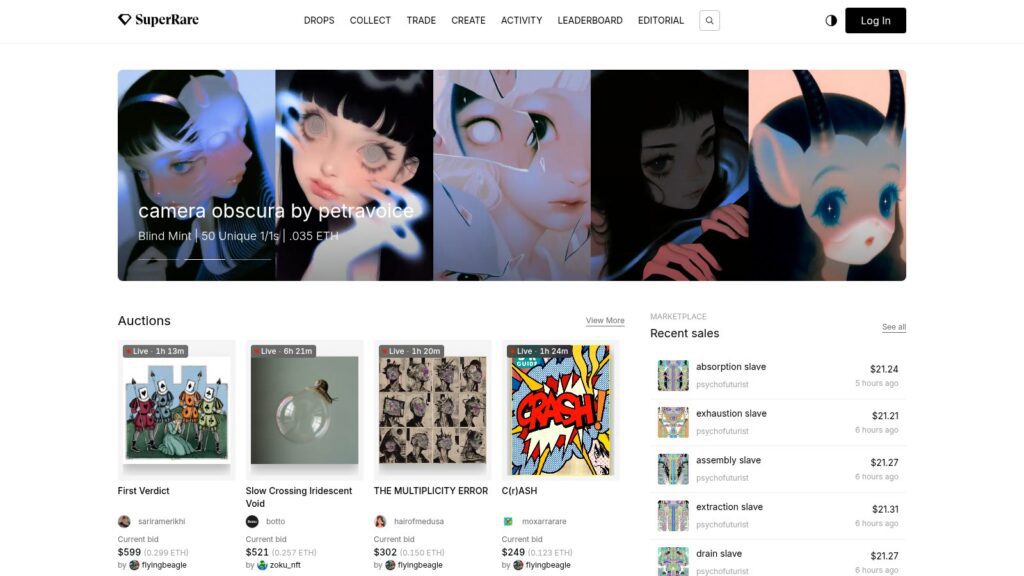
SuperRare is a curated marketplace. Its help center says only artists who are invited to the platform can mint there. The terms are the same whether a work sells at auction, by offer, or at a set price. On the first sale, the artist keeps 85% and the SuperRare DAO Community Treasury receives 15%. On every resale after that, the artist receives 10% as a royalty and the seller keeps 90%. Buyers also pay a 3% marketplace fee on top of the price, which goes to the DAO treasury.
Two details matter if you are arriving from Blur. SuperRare says you can’t currently sell an NFT there that you bought somewhere else. It also advises owners not to accept offers on SuperRare tokens through OpenSea, because that “runs the risk of bypassing the Artist royalty system.” It suits collectors who buy single works and want the resale royalty settled up front, not left to each seller.
If you collect generative art: Art Blocks
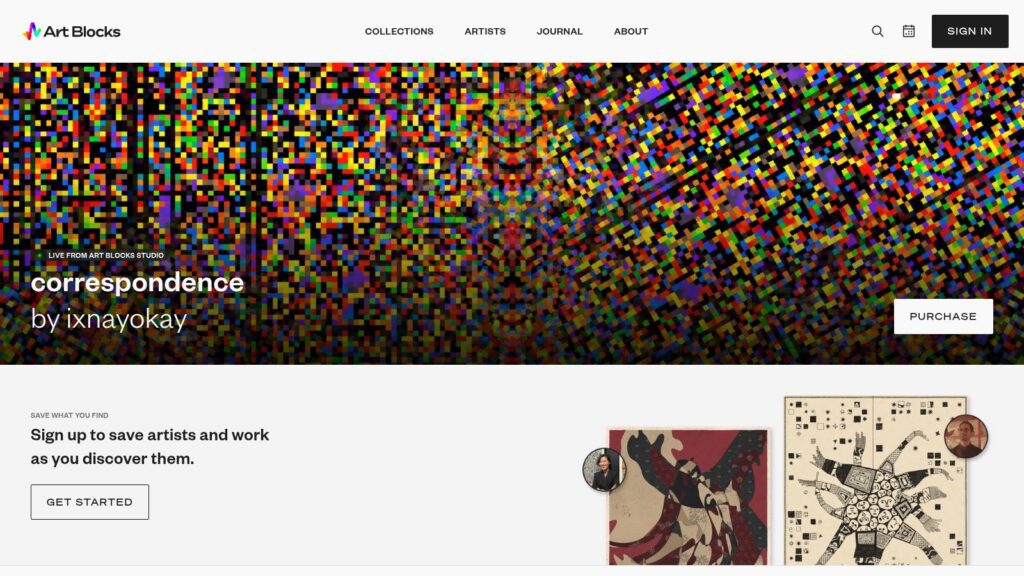
Art Blocks hosts long-form generative projects, where the collector’s mint produces an output from the artist’s code. It also runs a secondary marketplace for previously released works from its own collections. Its developer documentation sets out the money. For Art Blocks Studio projects, primary sales go 90% to the artist and 10% to Art Blocks. Secondary royalties are “up to 5% total.” By default, two-thirds go to the artist and one-third to Art Blocks, paid through a splitter contract.
Those royalties follow the ERC-2981 standard and the Royalty Registry, which Art Blocks says is supported by all major secondary marketplaces. When we checked the homepage on November 13, it was featuring mints “live from Art Blocks Studio” next to works “live from the Generative Art Museum.” It suits collectors who follow artists and algorithms more than individual tokens.
If you collect PFPs or a bit of everything: OpenSea
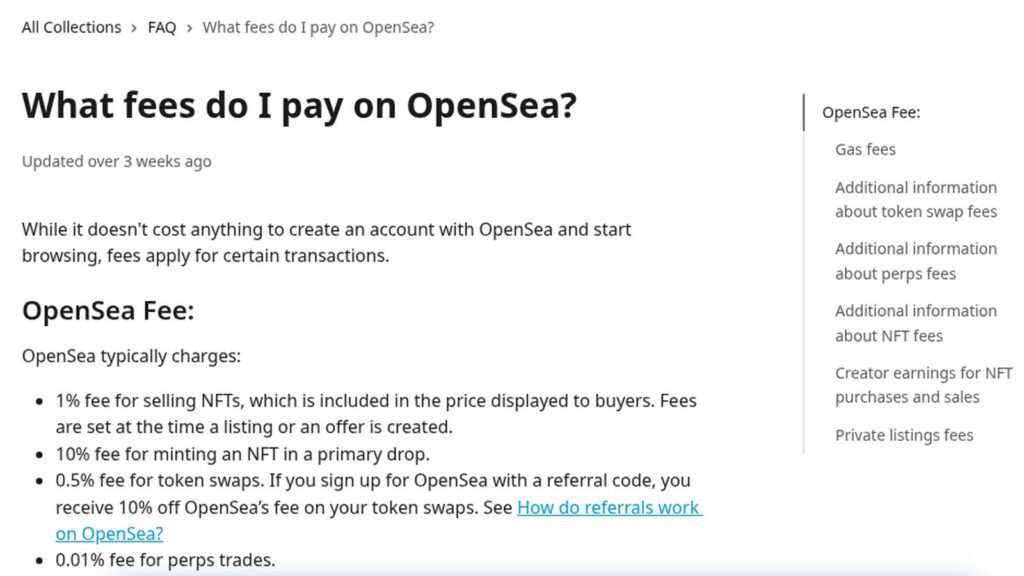
For profile-picture collections and mixed wallets, OpenSea is the general-purpose option still standing. It covers Ethereum, Solana and other chains, and also offers token swaps. Its help center lists a 1% fee for selling NFTs, which is included in the price buyers see, and a 10% fee for minting in a primary drop. Private listings reserved for one buyer’s wallet carry no OpenSea fee.
Royalties depend on the collection. On OpenSea, creator earnings are either required or optional. Creators can require them if their contract supports the ERC721-C or ERC1155-C standard, or if they deployed through OpenSea Studio after April 2, 2024. Otherwise the creator suggests a rate and the seller chooses whether to pay it, with no minimum. If paying artists matters to you, check the collection’s setting before you list, and leave creator earnings switched on when it is optional.
If you collect Tezos art: objkt
Blur never served Tezos, but plenty of Ethereum collectors also hold work on it. objkt’s fee page is short. It charges a 5% marketplace fee on sales through its contracts, paid by the seller, and royalties come out of every sale before the seller is paid. Its worked example is a 100 XTZ sale with 20% royalties, where the creators receive 20 XTZ, objkt takes 5, and the seller keeps 75. Sales that run through third-party contracts such as Teia carry no extra objkt fee.
Where not to look: Magic Eden on Ethereum
Magic Eden no longer serves Ethereum collectors. Its help center says marketplace support for EVM chains and Bitcoin ended on March 9, 2026, leaving the Solana Marketplace and Packs. If you collect on Solana, Magic Eden charges 2% on transactions and lets buyers choose whether to honor royalties unless the collection enforces them. If you once listed Ethereum NFTs there, the approvals you granted stay on the blockchain until you revoke them.
Before you list anywhere new
- Clean up old permissions. Every marketplace you listed on probably still has approval to move your NFTs. Our step-by-step guide to revoking NFT approvals shows how to find and cancel them.
- Check the royalty setting, not just the fee. A lower platform fee can mean the artist gets nothing on resale. The table above shows which venues pay creators on every sale and which leave it to the seller.
- Keep your own records. Save contract addresses, token IDs and original files. Blur is the latest venue to close, not the first. See what happens to your NFTs in a platform shutdown.
- Trust only official links. Shutdowns attract fake “migration” and “claim” pages. Blur’s own announcement warned about impersonators.
Why the after-Blur choice is a culture choice
Blur grew by treating NFTs as a trading market and creator royalties as largely optional, and in 2023 OpenSea moved to optional creator fees for new collections too. With the site closed, collectors can choose again what kind of market they want to support. Venues that build the artist’s cut into their own terms, like SuperRare and objkt, are making one bet. So are projects that set royalties in the contract, as Art Blocks does. Venues that leave it to each seller are making another. Either way, the choice is now made by collectors one listing at a time. Follow the venues and the arguments in our NFT marketplaces coverage.