


The Shape of Human Values is a solo exhibition by French new-media artist Maurice Benayoun at MEET Digital Culture Center in Milan, Italy. It is open from Thursday, October 29, 2026, through Sunday, January 31, 2027, Thursday to Sunday from 2:30 to 7:30 p.m. local time, at Viale Vittorio Veneto 2. The opening night was Wednesday, October 28. At its center is the Neuro-Design Station: you put on an EEG headset, shape a 3D form for a human value like Love, Peace or Power with your brain activity, and that form is recorded on the blockchain as an NFT that belongs to you.
That makes it a museum show where the visitor is the one who mints. MEET calls Milan one of the final stops of Value of Values, a project it dates to 2016 that has toured cities around the world, and presents the show as a culmination of ten years of research. For NFT collectors, it’s also a pointed piece of art about the thing this market keeps arguing over: what makes something valuable, and who gets to decide. Here’s what’s in the show, how the token side works, and why Benayoun’s long career makes it worth a look.
What’s in The Shape of Human Values
MEET’s guide to the works on display lays the show out room by room. The path starts with your brain and ends with a map of the world:
- Lounge: City Adds Value, about how a city pushes values on its residents through public messaging and advertising, plus a video tour of Morphogenesis of Values, the project’s 2022 show at Asia Society Hong Kong.
- Creative Studio: a Conceptual Art Map tracing 40 years of Benayoun’s experiments, and a video selection of 22 of his works, from Quarxs to D.Rive (2025).
- Gallery 1: the Neuro-Design Station, then Crypto Characters (the 3D values turned into printed, ideogram-like images), The Reader (an AI that tries to “read” those shapes) and The Interpreter (two AIs, one with an artistic bias and one with a marketing bias that writes captions to sell values as products).
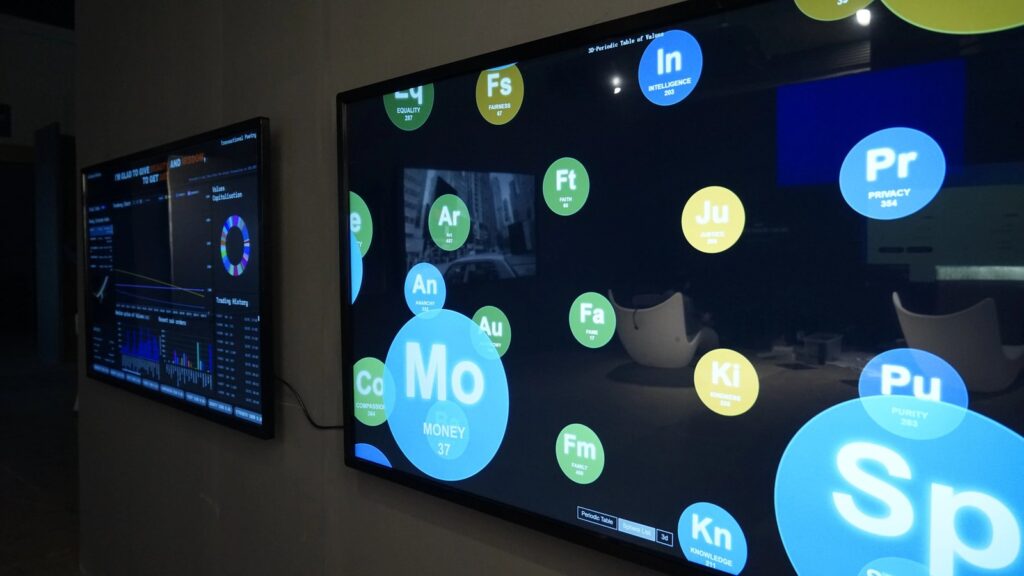
- Gallery 2: the Value Trading Room, where participants can barter the values they made; the Periodic Table of Values; and The Origin of Minting Values, a sculpture by collaborator Nicolás Mendoza Leal comparing the minting of Thai amulets with crypto tokens.
- Gallery 3: Reified Absence, 3D-printed sculptures of the empty space where a value should be, and Transactional Poetry, which turns trades into lines of algorithmic verse.
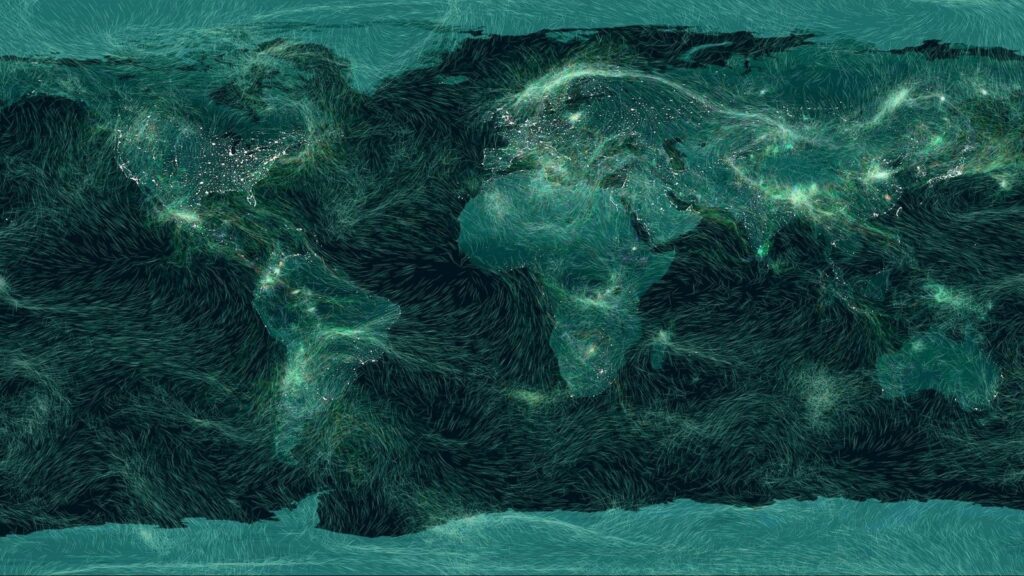
- Immersive Room: Emotion Winds, which reads online data about the moods of 3,200 major cities and lays it over real-time wind maps, so feelings drift across the planet like weather.
The exhibition is presented with Nicolás Mendoza, under the patronage of the Institut français Milano, with support from Nanjing University’s School of Arts and MobenFact.
How the brainwave NFT works
Benayoun calls participants “Brain Workers.” In Benayoun’s own description, the shapes start as a kind of evolving ecosystem, and your brain activity steers which forms survive as you try to match a concept such as FREEDOM or POWER. MEET puts it this way: the algorithm proposes the visual form, and the human brain acts as filter and supervisor. It’s the reverse of the usual prompt-and-generate AI workflow.

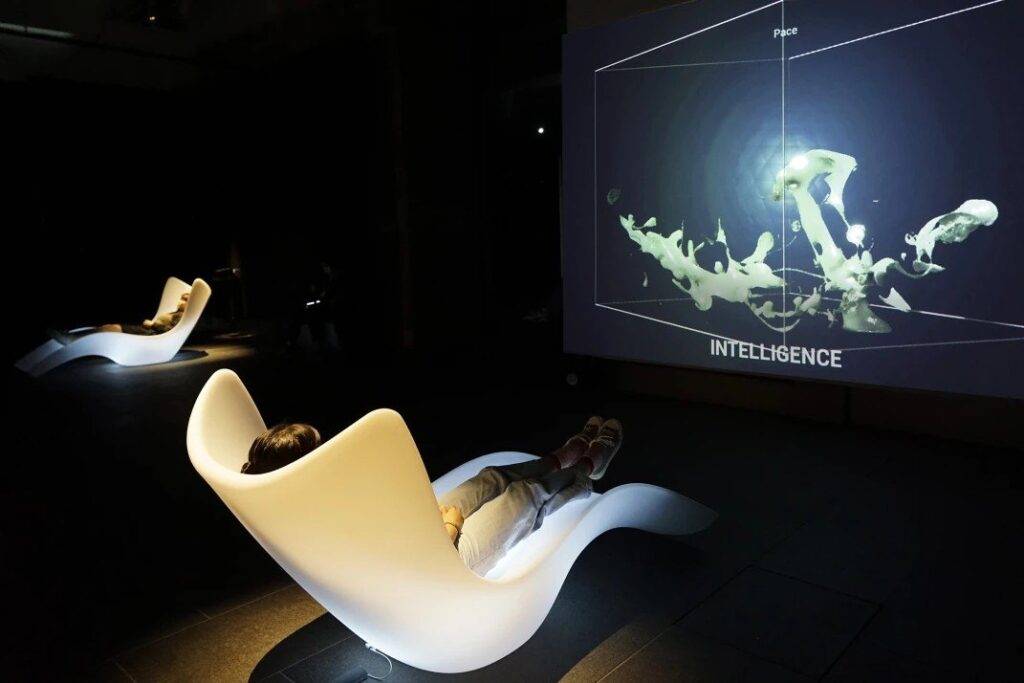
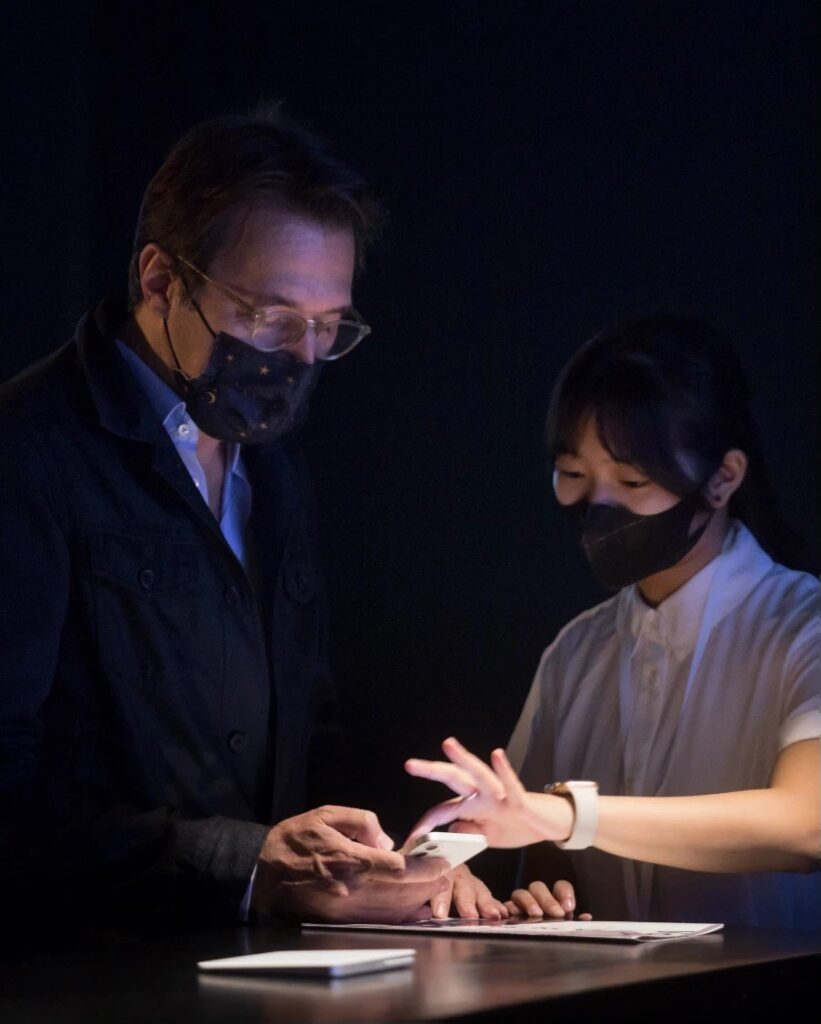
Each finished shape becomes a named, numbered 3D model, like FREEDOM 0001 or FREEDOM 0002, and is registered on the blockchain as a token. According to MEET, you scan a QR code to redeem the token into your wallet. From there, the project says, you can keep it, give it away, sell it or barter it, and you’re free to use the 3D model to make other artworks or objects.

The trading is the artwork, not a side feature. “The transaction is the only way to know the objective value of a given value,” the project’s about page says. Swap PEACE and LOVE for MONEY and the system writes it up as poetry; Benayoun’s own example line is “I had PEACE, I got LOVE, and now I want MONEY.” The Periodic Table of Values then reshuffles itself based on how people group values in their collections, so Money may drift toward Power while Love drifts toward Family. The project also runs a public web app at vov.art with its trading platform and monitor.
Before you scan anything: MEET’s pages don’t say which blockchain the tokens use or whether minting or trading costs anything beyond admission, so ask on site and read what your wallet asks you to sign. Use only the QR code at the station or the project’s official site, not links sent in replies or DMs. Our guide to forgotten marketplace approvals explains why that matters long after the visit.
Who Maurice Benayoun is
Benayoun, also known as MoBen, was born in 1957 in Mascara, Algeria, and is based in Paris and Hong Kong, according to his official bio. He has been building art out of new technology since the early 1990s: the 3D computer-animated series Quarxs (1991–93); Tunnel under the Atlantic (1995), a virtual-reality tunnel connecting the Centre Pompidou in Paris and the Musée d’art contemporain de Montréal; and World Skin (1997), “a photo safari in the land of war,” shown in Linz. His bio also lists two street works in Barcelona made with Refik Anadol.
Value of Values grew out of The Brain Factory, which Benayoun began in 2016 with architect and artist Tobias Klein, and the blockchain side came with Mendoza, whose work focuses on art and cryptocurrencies. The project is tied to the Neuro-Design Lab at City University of Hong Kong’s School of Creative Media, which lists Benayoun as director. Before Milan, versions of the work were shown at the Bauhaus 100 exhibition in Macerata, Italy, in 2019, curated by MEET founder Maria Grazia Mattei; at Asia Society Hong Kong in 2022; and at the 10th Beijing International Art Biennale, which opened in December 2025.
How to visit
- Where: MEET Digital Culture Center, Viale Vittorio Veneto 2, 20124 Milan, Italy.
- Dates: October 29, 2026 – January 31, 2027.
- Hours: Thursday through Sunday, 2:30 – 7:30 p.m. local time.
- Tickets: MEET’s site sends visitors to its ticket page on Fever, where the entrance ticket covers MEET’s whole current program. Check there for prices and time slots.
Why this show matters for onchain art
Most NFT art in museums arrives as finished work on a screen. Here the museum hands visitors the whole cycle: making, owning and trading, and then shows them the results as a portrait of what people prize. Benayoun was making virtual-reality art at the Pompidou in 1995, so this is a pioneer of digital culture taking the token seriously enough to critique it from the inside. It also fits a run of institutions making room for this history, from the Centre Pompidou’s new digital art committee to Rhizome’s net art anniversary show and Emi Kusano’s upcoming AI art museum show in Japan. For more artists and exhibitions like this, browse our NFT art coverage.
Sources
- MEET: The Shape of Human Values (dates, hours, credits)
- MEET: The Shape of Human Values, the artworks on display
- Value of Values: About VoV
- Maurice Benayoun: biography
- Maurice Benayoun: exhibitions
- Maurice Benayoun: Beijing International Art Biennale, The Value of Human Values
- City University of Hong Kong School of Creative Media: Neuro-Design Lab
- Streaming Museum: Value of Values by Maurice Benayoun