


Operator’s Human Unreadable reaches its third and final act at the Whitney Museum of American Art in New York, with five live performances from November 19 to 22, 2026. Artist duo Operator, Ania Catherine and Dejha Ti, will have dancers perform the hidden choreography behind the first hundred pieces of the collection they released on Art Blocks in May 2023. If you own one of those pieces (mint #2 through #101), the movement sequence encoded in your token is part of the show. Tickets are on sale now through the Whitney’s event page, and two of the performances will be livestreamed to art institutions in Europe and North America.
That makes Act III one of the rare times a generative NFT collection ends somewhere other than a screen. Human Unreadable was built as a three-part work from the start: mint the art, uncover the code underneath it, then watch human bodies perform it. Here is how the three acts connect, what collectors should know, and why a museum stage is the right last chapter for this piece of onchain art.

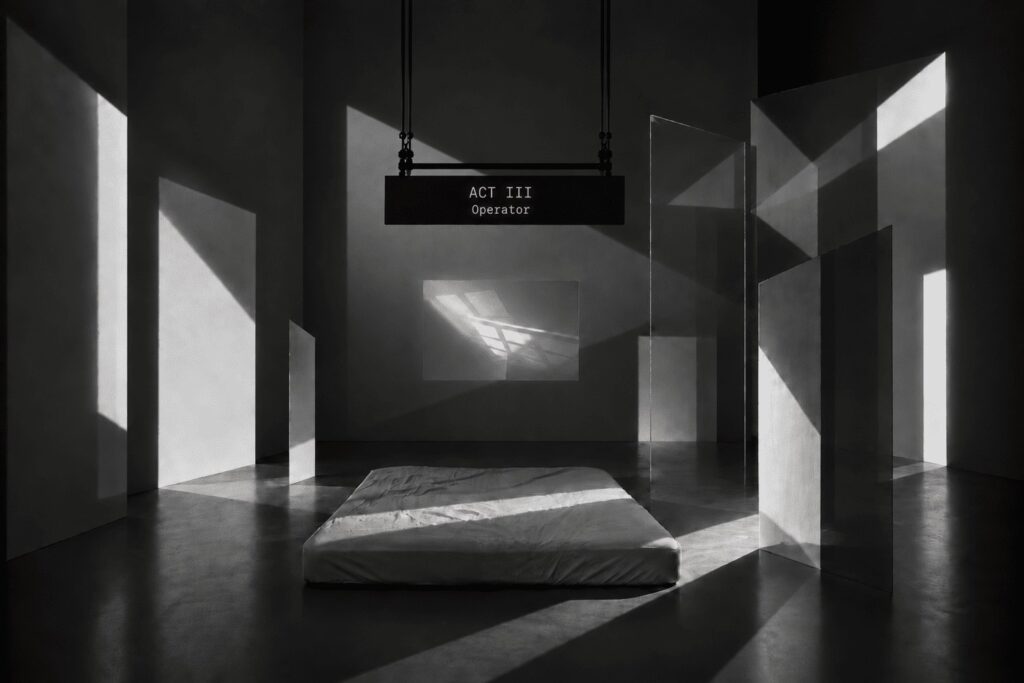
What Operator’s Human Unreadable is
Ania Catherine, a choreographer and performance artist, and Dejha Ti, a multimedia artist and human-computer interaction technologist, have worked together as Operator for years; their official site says they were originally from Los Angeles and are now based in Barcelona. For Human Unreadable, they built a library of dance movements and an algorithm that generates choreographic sequences stored on the Ethereum blockchain, according to the Whitney. The Whitney places the work in a lineage that runs from Merce Cunningham and Analivia Cordeiro to the 1960s collective E.A.T. (Experiments in Art and Technology). Operator calls the whole arc “the slow recovery of the human.”
The collection on Art Blocks Curated has 400 works. Each image is made of a human body, generative glass and an X-ray-style shader, and Operator’s Human Unreadable page says every output is driven by the motion data of its own onchain choreographic sequence. The work won Operator the Lumen Prize Generative Art Award in 2023.

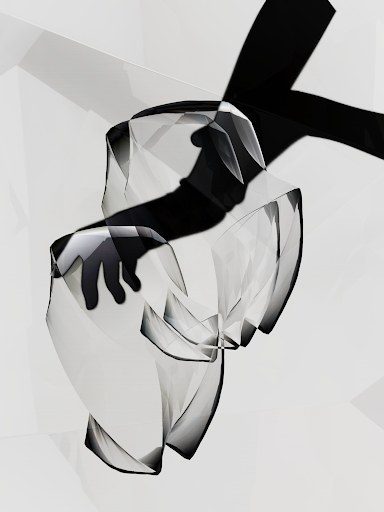
How the three acts work
- Act I, Reveal (May 24, 2023): collectors minted the 400 works on Art Blocks. Each mint generated a unique choreographic sequence, which Operator calls a “choreo hash,” and kept it hidden inside the artwork.
- Act II, Uncover (from November 24, 2023): owners could connect their wallet to Operator’s Act II site and mint the choreographic score behind their piece, a fully onchain SVG token with no IPFS dependency. Operator says the collector pays only the transaction fee, there is no time limit, and an owner can choose never to reveal it. If they sell without revealing, the new owner gets that choice.
- Act III, Witness (November 19–22, 2026): the first hundred scores become the raw material for an 80-minute multimedia performance that moves between computational choreography and spoken narrative. In the Whitney’s words, dancers bring the generative art “out of the screen into performers.”

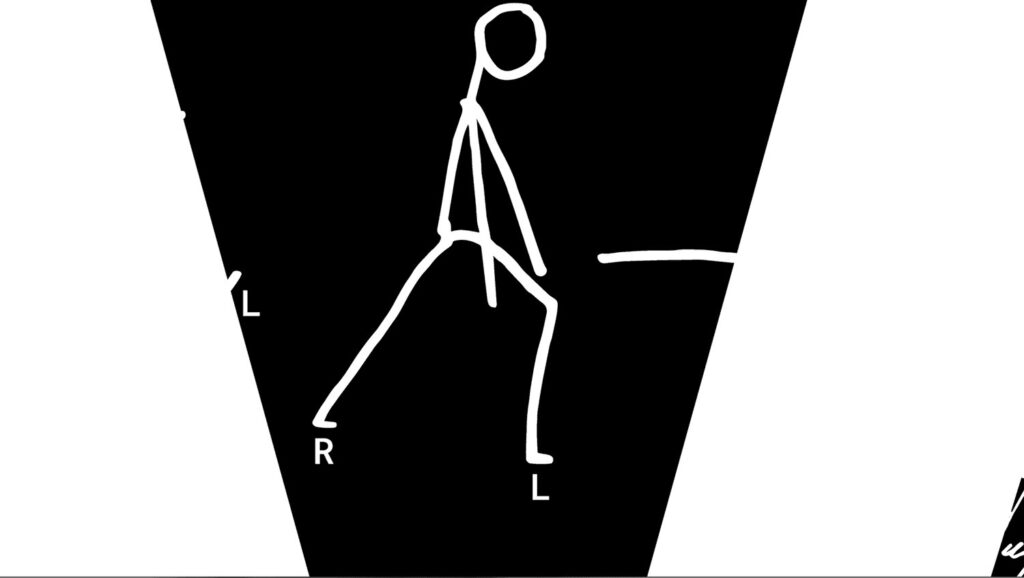
One detail matters for anyone who owns or is thinking about collecting a piece: Operator says the Art Blocks token and its choreographic score are token-bound through the contract’s ownerOf function, so they can’t be sold or transferred separately. The score always travels with the artwork that produced it. Operator’s FAQ also says mints #0 and #1 are artist mints it holds, which is why the performed set starts at #2, and that holders of its Privacy Key 00 will have one of their sequences performed regardless of mint number.
What collectors should know before November 19
- Check your mint number. Pieces #2 through #101 are the ones Operator says will be performed. The Whitney describes them as the first hundred choreographic scores.
- Act II is still open. Operator says there is no deadline to uncover a score, so a holder who never revealed theirs can still do it on the official Act II site. Use only the link from Operator’s own page, and read what your wallet asks you to sign. Our guide to forgotten marketplace approvals explains why that habit matters.
- The performance isn’t a token event. Neither the Whitney nor Operator describes a new mint, airdrop or claim tied to Act III, so treat any DM or reply offering one as a likely scam.
When and where to see Act III
- Where: the Susan and John Hess Family Theater, Floor 3, Whitney Museum of American Art, New York.
- Dates: Thursday, November 19, at 7 p.m.; Saturday, November 21, at 1 p.m. and 7 p.m.; and Sunday, November 22, at 11 a.m. and 5 p.m. (New York time).
- Tickets: $30 for adults and $20 for members, seniors and students, according to the Whitney’s event page. Capacity is limited, and the museum recommends buying in advance.
- Livestreams: the November 21, 1 p.m. show streams to Haus der Kunst (Munich), LACMA (Los Angeles), NEWART Centre (Tarragona), NODE Foundation (Palo Alto), Nxt Museum (Amsterdam), OGR Torino, Onassis Ready (Athens), Palazzo Diedo Berggruen (Venice), PHI (Montreal) and SOLO Contemporary (Madrid). The November 22, 11 a.m. show streams to HEK (Basel), LAC Lugano Arte e Cultura, Nxt Museum, PHI and the V&A (London). The Whitney says each livestream is live-mixed and unique to that performance.

Why the Whitney is the right stage
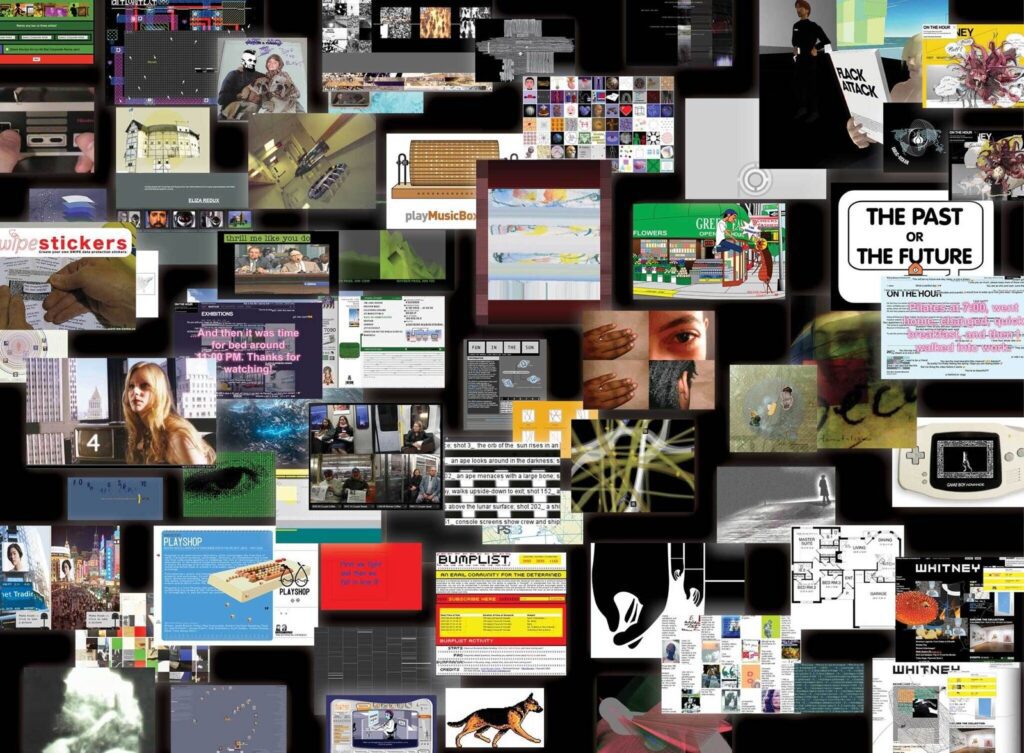
Act III is part of artport: A History of Internet Art, which opens November 21 on the Whitney’s sixth floor and marks 25 years of artport, the museum’s online space for net art commissions, launched in 2001. The show brings together more than 100 works commissioned for artport and is organized by Christiane Paul, the Whitney’s curator of digital art. Operator is also adding Entr’acte, a new database artwork built from the archive of making Act III, to that exhibition.
For onchain art, the setting says a lot. A generative collection that began as a Dutch auction on Art Blocks is closing inside a museum’s history of internet art, performed by people rather than rendered by a browser. It continues a run of institutions treating this work as part of art history, from Rhizome’s net art at 30 show to Maurice Benayoun’s brainwave NFT exhibition in Milan. It’s also a reminder of how much of the Art Blocks story has moved into physical space, as we saw at Art Blocks Marfa Weekend 2026. For more artists and exhibitions like this, browse our NFT art coverage.