


Dave Krugman’s WINDOWS // NYC is a generative photography project built from 1,000 photographs of lit New York windows, minted on Ethereum with Transient Labs. The windows are assembled into collector-owned BUILDINGS and NEIGHBORHOODS, and all of it feeds CITY, a single 1/1 artwork that redraws the project’s own network of owners as a living map. Collector Adam Weitsman acquired CITY on November 5, 2026. The physical version, a large lightbox holding all 1,000 windows, is reported to be headed to the digital art museum Weitsman is building in Carl Sagan’s former house in Ithaca, New York. Krugman says the BUILDINGS mint closes for good on Thursday, November 12, which seals the city.
What makes the project worth a closer look isn’t the headline acquisition. It’s that the people who own the work are part of the image. Here is how the layers fit together, and why a photography project ended up with a social graph as its centerpiece.
What WINDOWS // NYC is
Krugman, a New York photographer and the founder of ALLSHIPS, describes WINDOWS // NYC on its project site as “five years in the making”: one thousand illuminated windows across the city forming “a randomized typological study.” The project launched with Transient Labs on June 16, 2026, and the WINDOWS collection is listed as sold out. In his November 7 post explaining the whole system, Krugman lays out the layers:
- WINDOWS, the 1,000 single photographs. Krugman calls them “the base identity layer of this project.”
- BUILDINGS, generative grids that pull those windows into facades. He calls this “our community layer.”
- NEIGHBORHOODS, 20 larger arrays whose holders can customize the window order.
- CITY, the 1/1 that binds it all, “our uniting onchain organism, like a biological circuit board.”
It starts with a photograph
Every layer depends on the camera work, and Krugman keeps pointing back to it. On November 8 he shared “the spot and the shot”: a backlit cabinet of bottles in an iconic New York restaurant where, he says, many of the conversations that shaped WINDOWS took place. One night, he writes, “we were like, damn, that’s a pretty sick window.” Now it is one of the 1,000. In the WINDOWS viewer it is Window 865, a “special” described as “backlit leaded-glass cabinet doors glow amber, revealing shelves of bottles behind diamond-paned panels.”
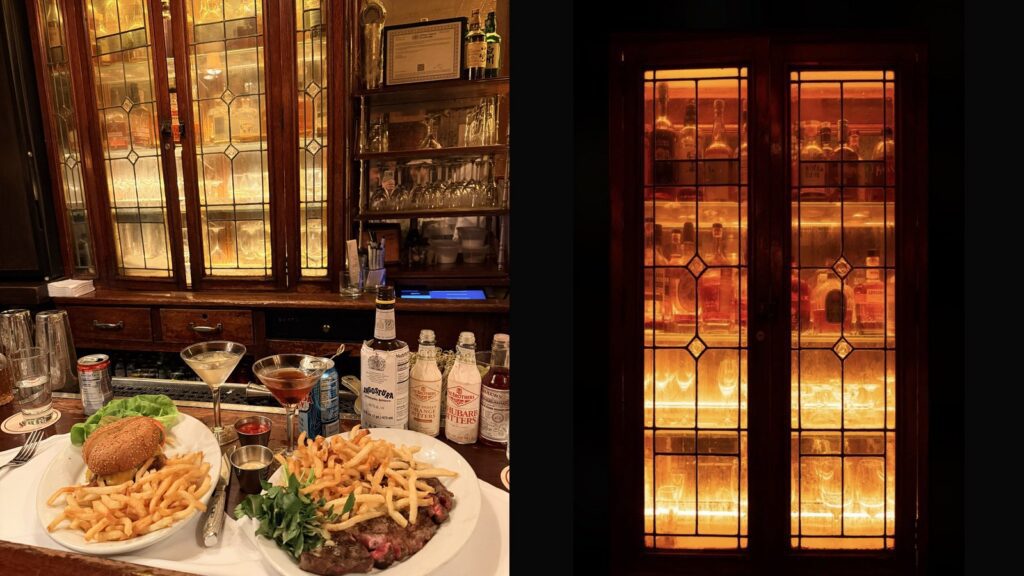
That is street photography logic, close to a typology in the tradition of artists who photograph one subject again and again until the repetition becomes the point. If you follow photographers working onchain, it’s worth reading next to our look at Light.art, a curated publisher of photography NFTs, and the wider NFT photography archive.
Buildings: landlords, tenants, and a social graph
BUILDINGS is where WINDOWS // NYC stops being a photo series and becomes a network. Krugman’s Buildings explorer puts it plainly: “Every building is an onchain social graph.” Each building is owned by one wallet, its landlord, and filled with windows owned by other people, its tenants. Open any building and you see the owner and the full chart of tenants living inside.
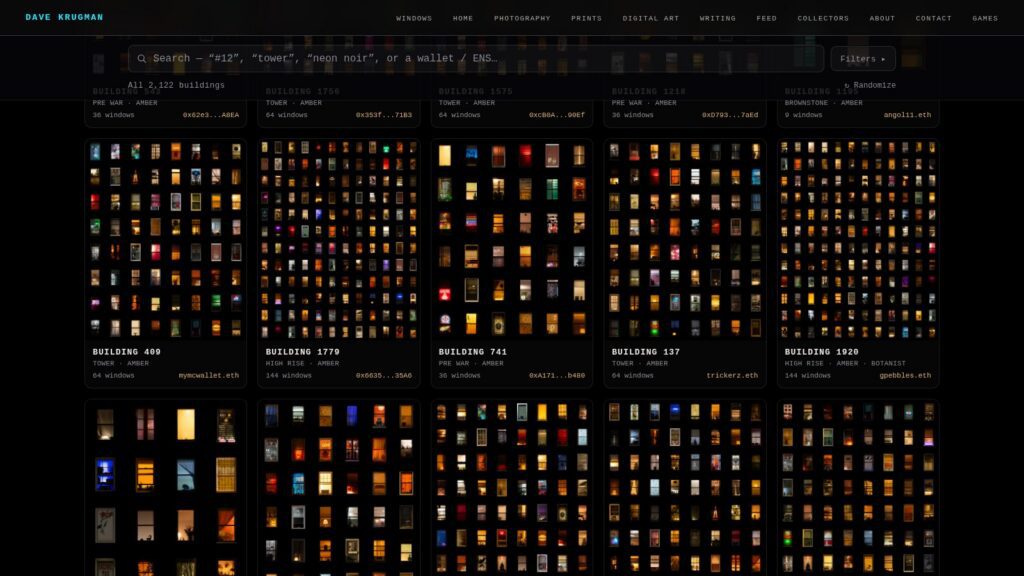
When we checked on November 10, the explorer listed 2,122 buildings. They come in recognizable New York types, from a nine-window Brownstone and a 16-window Walk Up to 36-window Pre War blocks, 64-window Towers, and 144-window High Rises. Krugman says the BUILDINGS mint on Transient Labs “closes forever on Thursday, November 12th at 4:20 PM EST,” and that once it does, “the CITY limits are sealed.”
Neighborhoods: collectors as co-authors
The NEIGHBORHOODS tier hands part of the composition to collectors. Each of the 20 holders can rearrange the windows inside their block. On November 4, Krugman highlighted Neighborhood 12, “A Cathode Blue Dream for Lady Liberty,” owned by Cryptobscure and “architected” by deltasauce. The pair, he wrote, “saw more than a city grid. They saw a canvas,” and used the arrangement “to embed more NYC iconography into the typology.”
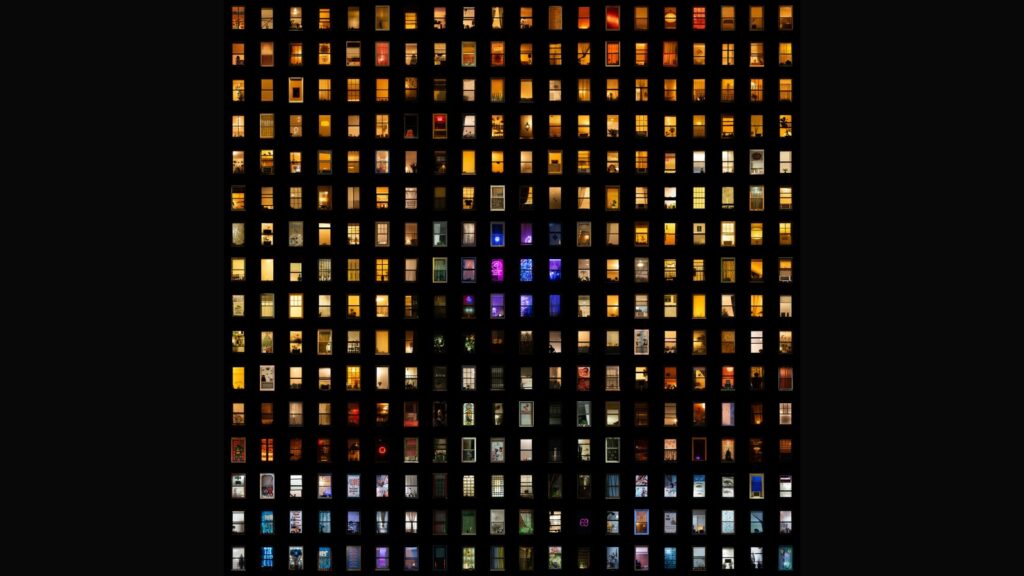
I love co-creation and wanted to create an opportunity for participation at a higher level for those wanting to take that leap. I knew people would have fun but I didn’t realize how creative things would get.
Dave Krugman, on Neighborhood 12
CITY: a 1/1 that maps its own collectors
CITY is where the social graph becomes the artwork. Krugman’s CITY page describes “tens of thousands of windows in an onchain neural net,” and says that “every pulse really happened.” The pulses are transfers of the collection plus what its holders have been doing elsewhere on Ethereum mainnet. Color shows how recent an action is, “white-hot within the hour, cooling to violet.” The city “beats once per Ethereum block,” and faint silver wiring “ties collectors to artists they hold.” So the picture changes as the community trades, collects, and moves.
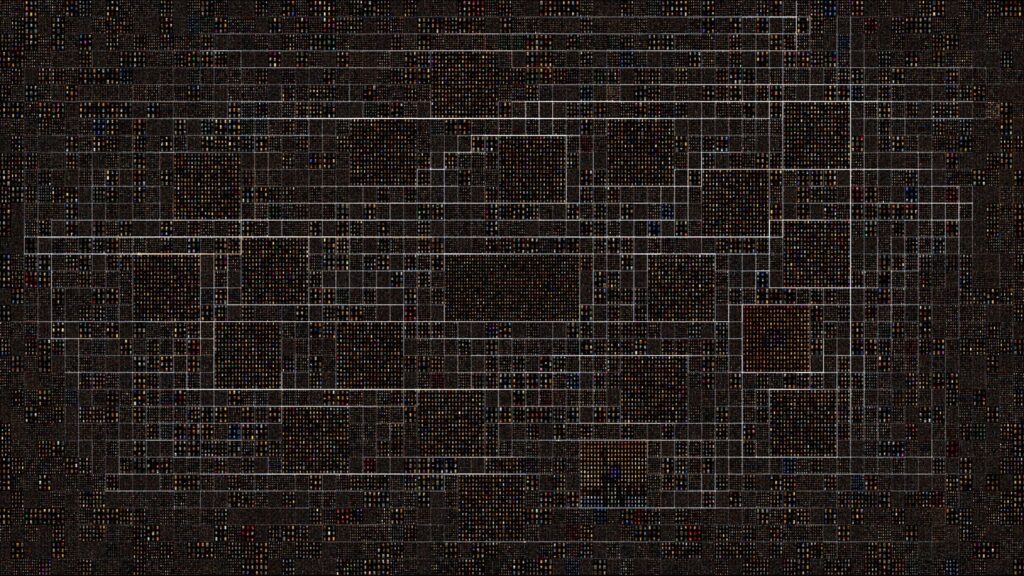
The token itself sits on Transient Labs, where the activity log shows CITY minted to Krugman on June 16, 2026 and transferred to Adam Weitsman on November 5. Weitsman called it “one of my favorite projects to date” and wrote that it was “hard to describe the complexity in a X post” (his post). Krugman’s thanks focused on what the support makes possible next: “This act of patronage and encouragement of my efforts will enable me to take this to levels I previously only dreamed of.”
From an onchain city to Carl Sagan’s house
CITY has a physical half: a “museum-quality physical lightbox, our beautiful city backlit by a warm amber glow,” in Krugman’s words. 24 Hours of Art’s Roger Dickerman, in the announcement Krugman quoted and thanked, reported that this grand-scale work of all 1,000 windows “will head to the future Digital Art Museum Weitsman is building in the former Carl Sagan Residence in Ithaca, New York.” Weitsman himself has described the property, on the gorge next to Cornell University, as a “Digital Art Museum/Project Galileo.” The museum is not open yet, so treat Ithaca as the work’s planned home, not a place to visit today.
It is an unusual route for an NFT: a work whose subject is the live behavior of its collectors, paired with a physical object meant for a room. It echoes a question we asked about Dmitri Cherniak’s Ringers in Motion at the Tel Aviv Museum of Art: what does an institution collect when the work is a system? And like Operator’s Human Unreadable at the Whitney, it treats New York as a place where onchain art gets performed, not just stored.
Why WINDOWS // NYC matters for photography onchain
Krugman’s stated aim was bigger than one sale. In his November 7 post he wrote that “the point of this project was to show how it takes a village, or CITY, to do things that make an impact,” and thanked collectors for “helping me prove that blockchain is a platform that can help fund the arts in profound and novel ways.” WINDOWS // NYC tests that claim in an interesting way. The ownership records aren’t paperwork around the photographs; they’re the material CITY is drawn from. Whether you collect or just look, the project is a clear example of photography, generative structure, and community meeting in one work.
How to explore WINDOWS // NYC
- See the project: the WINDOWS // NYC site explains each collection and hosts the trailer.
- Walk the city: Krugman’s explore page links the 1/1 CITY view, the windows and buildings explorers, and a memory game.
- Check the token: the CITY page on Transient Labs shows the 1/1’s contract and history.
- Timing: per Krugman, the BUILDINGS mint closes Thursday, November 12, 2026, at 4:20 p.m. Eastern. After that, the city’s footprint is fixed.
For more artists using code, archives, and institutions in new ways, browse our NFT art coverage.