


In an NFT platform shutdown, your tokens usually survive, because they live on a blockchain rather than on the company’s website. What breaks is everything around them: the interface you used to list and manage work, any wallet the platform held for you, and the servers or pinning that kept images and metadata loading. Two closures are on the calendar right now. Blur’s blur.io website is set to be deprecated on November 12, 2026, while its contracts stay onchain. The Abstract chain shuts down on December 15, 2026, and Abstract says assets left there after that date will be inaccessible. Each one breaks a different layer, so each needs different action from you.
This guide sorts the 2025–2026 closures into those layers, using what each platform actually said, so you can tell quickly whether a shutdown notice means “nothing to do” or “move now.”
The four layers that decide what an NFT platform shutdown means for you
- The token. The ownership record in a smart contract on a chain like Ethereum. If the chain keeps running, a company closing does not erase it.
- The venue. The website or app where you minted, listed, bid, or browsed. When it closes, the contracts can still work, but you need another tool to reach them.
- Custody. Whether the platform held your NFT or balance in a wallet it controlled. This is the real cliff: custodial assets have to be withdrawn while the company still offers a way out.
- Media and metadata. The image, video, and description your token points to. If those files sat on the platform’s servers or depended on its IPFS pinning, they can stop loading long after the token is “safe.”
A fifth case is rarer and more serious: the chain itself shutting down. Then the token layer is in question too.
How recent NFT platform shutdowns broke different layers
| Platform | What closed | Custody? | Media plan | Key date |
|---|---|---|---|---|
| MakersPlace | Marketplace (announced January 2025) | Yes, for Safebox and older artist custodial wallets | Ethereum NFTs stay visible on other marketplaces | Transfers through June 2025, with possible extensions |
| Nifty Gateway | Marketplace (withdrawal-only from January 2026) | Yes | Says it plans to keep metadata and images on its servers “in perpetuity” | Closed April 23, 2026; support still helps with late withdrawals |
| Foundation | Marketplace (offline April 2026) | No, but listed NFTs sit in escrow contracts | IPFS gateway maintained through April 27, 2027 | Delist manually; back up media before April 2027 |
| Blur | Website only; Blend stops matching new loans | Bidding-pool ETH and loan collateral | Not affected: protocol stays onchain | November 12, 2026 |
| Abstract | The whole chain | Everything on the chain | Depends on each project’s migration plan | December 15, 2026 |
Sources: MakersPlace’s exit notice, Nifty Gateway’s closure page, Foundation’s April 27, 2026 letter, Blur on X, and Abstract’s Migration Hub, all checked November 9, 2026.
Venue closures: the contracts outlive the website
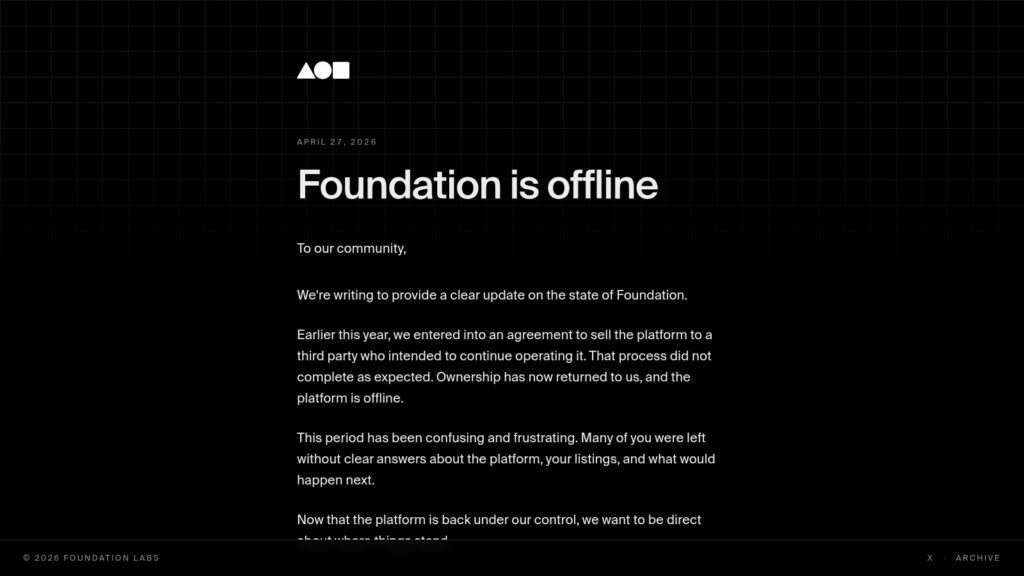
Foundation is the clearest example of a venue closing while ownership stays put. Its closing letter says the platform was “a non-custodial, onchain system” and that “your assets remain in your wallet and under your control.” The catch was practical. Anything listed for sale was held in Foundation’s escrow contracts, so owners had to delist manually without the Foundation UI. The letter points to community-built tools for exactly that. We covered the first days of that story in Foundation’s wind-down and why decentralization still matters.
Blur is the same kind of shutdown, with a deadline that is still ahead. Blur says only the blur.io frontend is being deprecated on November 12, and “the Blur marketplace protocol will remain operational on-chain.” The things to clear before then are the ones the website made easy: ETH sitting in Blur’s bidding pool, old listings and collection bids, and Blend loans, which stop matching new loans the same day. Our Blur shutdown checklist for NFT collectors walks through each one.
Chain shutdowns: when the ledger itself goes dark
Abstract is a different and harder case. It isn’t one website closing. The Ethereum layer 2 built by Pudgy Penguins’ parent company Igloo is winding down. Its Migration Hub says users have until December 15, 2026 to move assets, and that anyone who doesn’t “will lose access to their funds.” Abstract’s documentation describes its native bridge as moving ETH and ERC-20 tokens, not NFTs, so each NFT collection on Abstract depends on its own team’s plan.
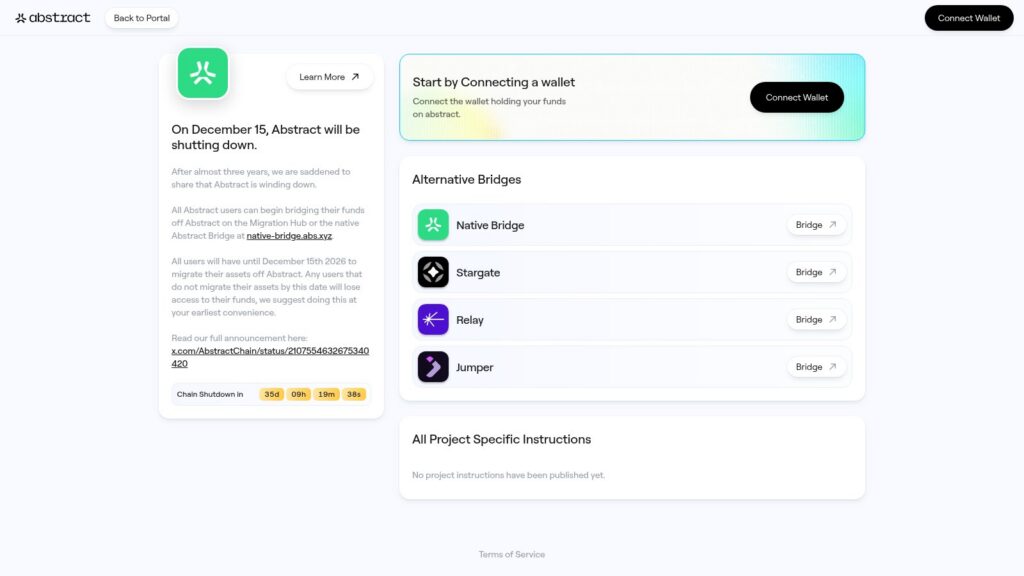
When we checked the Migration Hub on November 9, its “All Project Specific Instructions” panel still read “No project instructions have been published yet.” If you hold NFTs on Abstract, watch that panel and the collection’s official channels, and treat any migration link that reaches you by DM as a scam until proven otherwise. More detail is in our Abstract chain shutdown guide for NFT holders.
Custodial closures: the real deadline
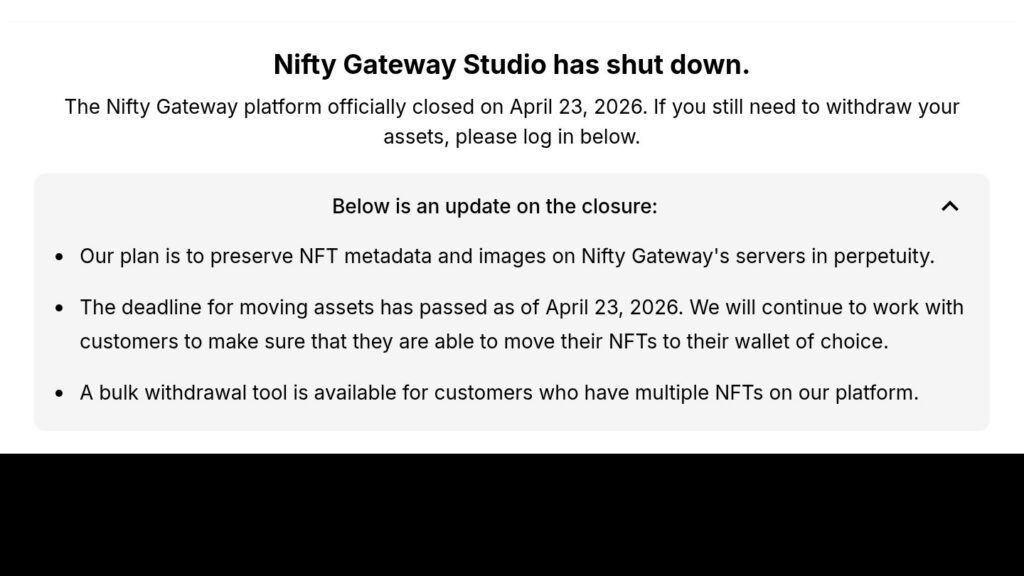
Custody is where an NFT platform shutdown can actually cost you something. Nifty Gateway, the Gemini-owned marketplace, announced in January 2026 that it was entering withdrawal-only mode. It extended the withdrawal deadline to April 23, 2026, the day the platform closed. Its site now says the asset deadline “has passed,” and that the team “will continue to work with customers” to move NFTs to a wallet of their choice. It also says the team plans to keep NFT metadata and images on Nifty Gateway’s servers “in perpetuity.”
MakersPlace followed the same pattern a year earlier. When it announced its exit in January 2025, it told artists and collectors to move work out of its custodial Safebox wallets, set a transfer window through June 2025, and noted that its Ethereum-minted NFTs “remain tracked and accessible on secondary marketplaces.” The lesson from both is the same. If a platform holds your NFT, an announcement is a deadline, not just news.
Media: the slow-motion risk after a platform closes
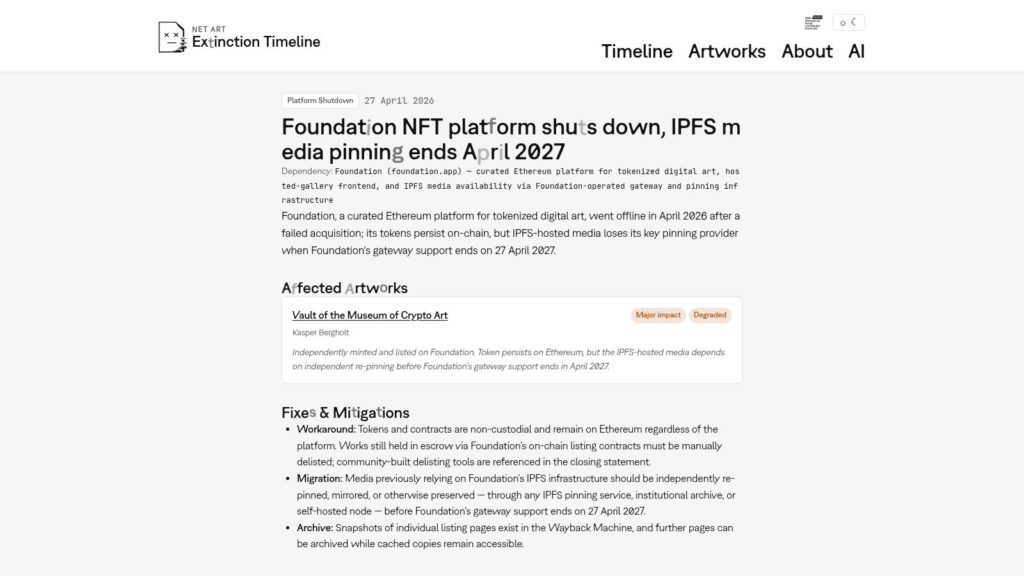
The token can be fine while the artwork disappears from view. Foundation says it will maintain its IPFS gateway through April 27, 2027, “one calendar year from the date of this letter.” After that, media that nobody else has pinned may stop loading through Foundation-dependent links. ZKM, the Karlsruhe media art center, now tracks cases like this in its Net Art Extinction Timeline. Its Foundation entry says the tokens persist, but that IPFS-hosted media “depends on independent re-pinning” before Foundation’s support ends.
For artists, this layer matters most, because it is the work itself. For collectors, it is the difference between owning a working piece and owning a pointer to a broken link.
A checklist for any NFT platform shutdown
- Name the layer. Read the official notice and ask: is this the website, the custody, the media hosting, or the chain? Only the last two can affect the token or the art itself.
- Withdraw anything custodial first. Balances, NFTs held in platform wallets, and loan collateral have the hardest deadlines.
- Clear open positions while the UI still works. Cancel listings and bids, delist from escrow contracts, pull pooled ETH, and close out loans.
- Revoke approvals you no longer need. Use a tool like Etherscan’s Token Approval Checker once you are done with a marketplace.
- Back up the media. Find each token’s metadata and IPFS CID, then pin the files with a pinning service or your own node, or keep local copies of work you care about.
- Trust only official channels. Blur and Abstract both warned about impersonators. Shutdowns attract fake “migration” and “claim” pages.
- Artists: keep your own records. Save contract addresses, token IDs, and original files outside any single platform. That way, when a venue closes, you can show and sell the work somewhere else.
Why NFT platform shutdowns matter for digital culture
Each closure tests the same idea: that owning a digital work shouldn’t depend on one company staying in business. The 2026 record is mixed. Ownership mostly held, because tokens on Ethereum didn’t vanish when Foundation, Nifty Gateway, or MakersPlace went quiet. The softer layers proved fragile: the websites, custody, and file hosting that made the work easy to see. Platforms turned out to be venues, not vaults. Read more about where ownership ends and hosting begins in our Digital Ownership coverage.