


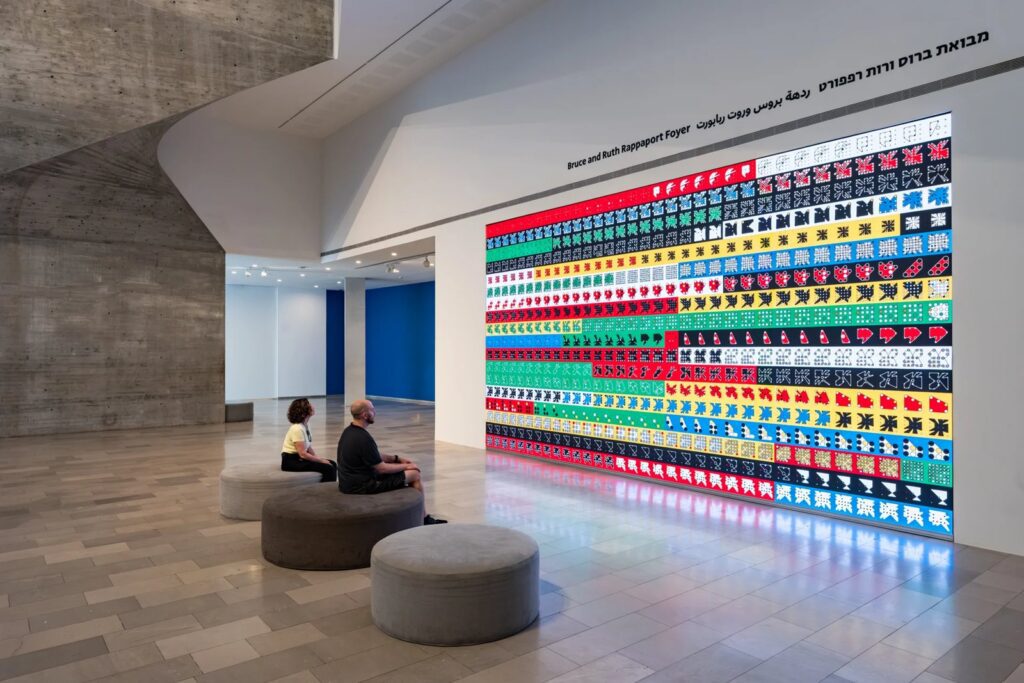
Dmitri Cherniak’s Ringers is on a museum wall in a form collectors have never seen before. Dmitri Cherniak: Ringers in Motion, a live software work made for the Tel Aviv Museum of Art, runs in the museum’s Bruce and Ruth Rappaport Foyer until Saturday, November 14, 2026. Nothing on the screen is a recording. According to the artist’s project page, 55 scenes are drawn in code as they play, for more than an hour without repeating. If you can’t get to Tel Aviv in the next two weeks, the same work runs in your browser on Cherniak’s live Ringers in Motion site.
That makes this a good moment to look again at one of generative art’s best-known collections. This entry in our Behind the Bluechips guide to legacy NFT artists covers what Ringers is, how Cherniak has tried to show a system rather than a single picture, and what the Tel Aviv commission says about how museums are starting to handle code-based art.

What Ringers is
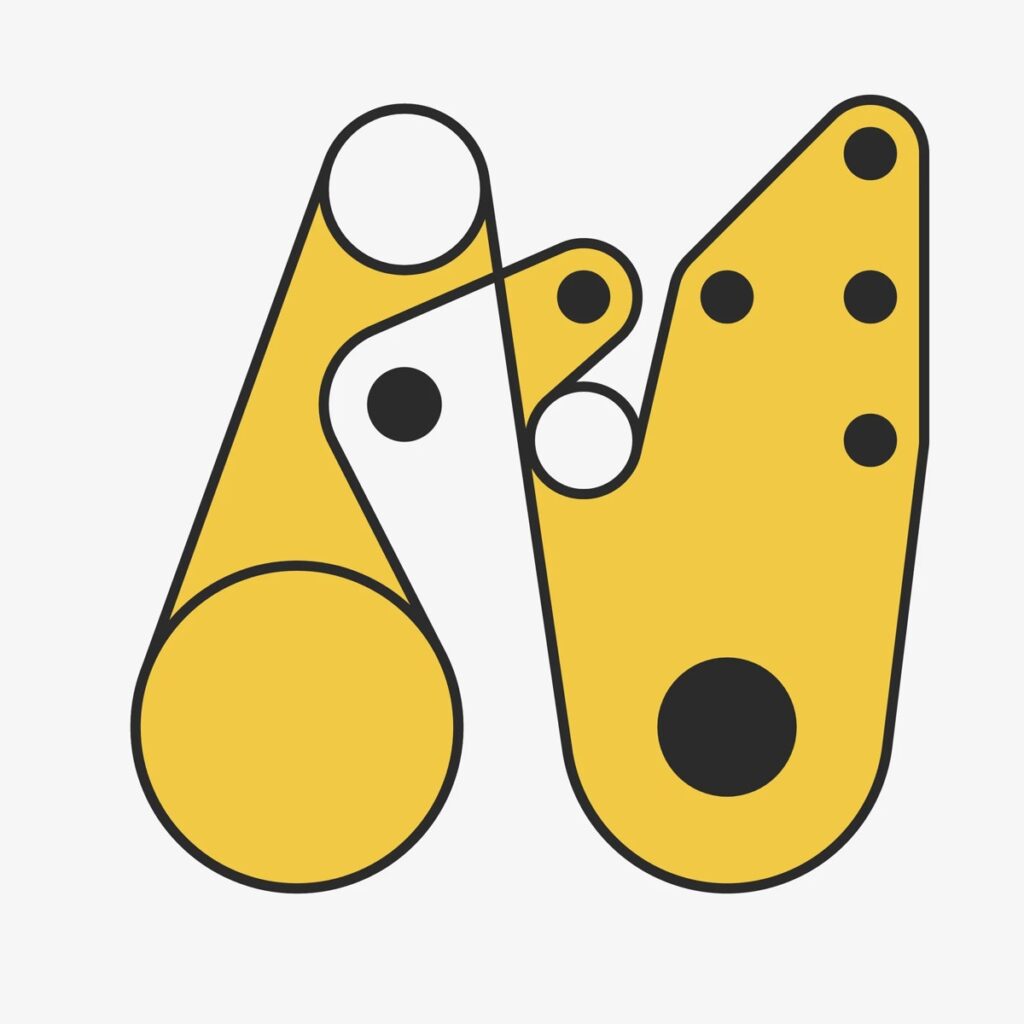
Ringers starts with one question, in the words of Cherniak’s own Ringers page: “how many ways can a string wrap around a set of pegs?” The collection was released on Art Blocks Curated on January 31, 2021, and has 1,000 unique works. Each one was generated at the moment of minting from a unique transaction hash, using JavaScript in the browser. Peg count, scale, arrangement, wrapping direction and color all change from piece to piece, so dense grids and spare outlines come out of the same set of rules.
Neither the artist nor the collector chose any final image in advance. That is the core of long-form generative art on Art Blocks, and it is why Ringers is still a reference point five years later. Cherniak designed the rules and their limits. The outputs show what those rules allow.
The most famous example is Ringers #879, known as The Goose. Cherniak’s site says it got its name because viewers recognized a bird in its pegs, curves and yellow fields, even though it came from the same rules as the other 999 works. It’s a neat lesson in how generative art works: a carefully written system can still surprise the person who wrote it.

From one image to a grid
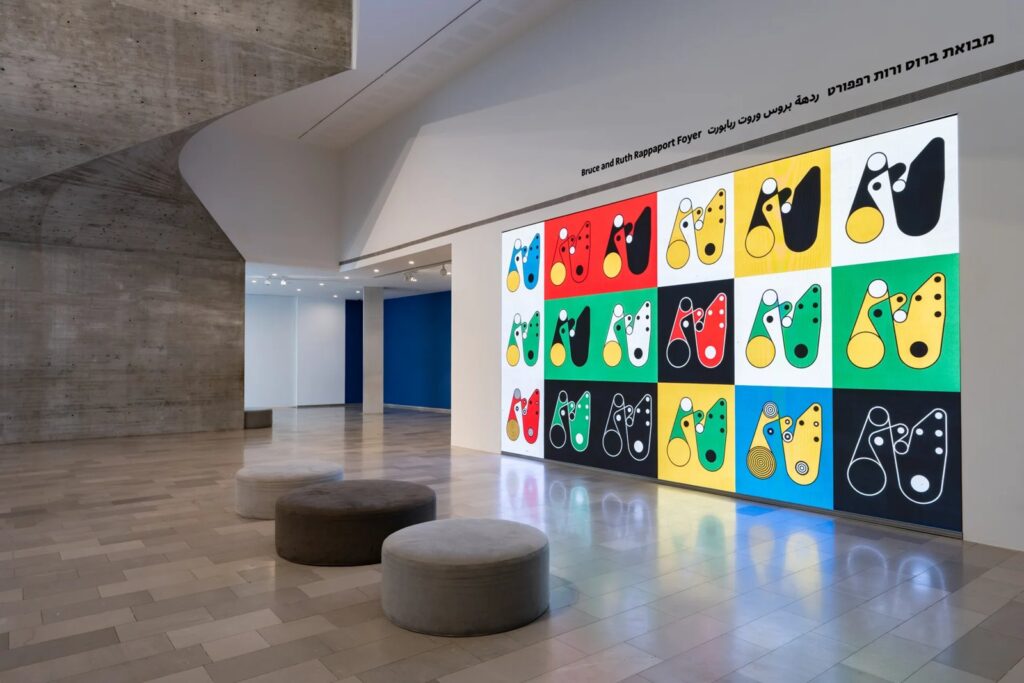
Cherniak has spent years on a practical problem: how do you exhibit a collection whose real subject is the space of possible images? In his essay for the Tel Aviv show, he writes that when curators asked how Ringers should be shown, his answer was always the same: “as prints arranged in a carefully curated grid.” One output is a composition; a grid starts to reveal the system.
You can trace that idea through his recent shows. In 2023, Ringers #962: The LACMA Iterations, made with Avant Arte in support of the Los Angeles County Museum of Art, placed Ringers #962 at the center of a three-by-three grid. Each variation around it changes the proportion of pegs the string wraps, while keeping the yellow peg. Cherniak describes #962 in the essay as the work entering LACMA’s collection, and the project page shows an illustrated card that breaks the algorithm into six steps: generate, sample, center, sort, connect and color. In 2025, the Toledo Museum of Art’s Infinite Images exhibition hung 25 Ringers as a five-by-five grid that grew more complex from left to right and top to bottom.
What changes when the grid moves
The Tel Aviv commission came from a different direction. In the essay, Cherniak notes that many museums had installed large LED screens and were looking for motion-based works to fill them. Curator Tal Lanir, who he says was building a serious new-media program at the museum, wanted the LACMA print’s idea in motion. Cherniak didn’t want to animate one Ringer or make a decorative loop. He built what he calls “something closer to a harness for generative art,” a system that stages the algorithm’s parameters and transitions in real time.
The Tel Aviv Museum of Art’s exhibition page describes the result as a dialogue between artist and machine, built from the number of circles, the lines around them, and eight colors. In its words, the work produces “a succession of images and combinations that will almost never repeat themselves.” Cherniak’s summary is shorter: “The LACMA print presents small multiples spatially. Ringers in Motion presents them temporally.”
The essay also explains some choices you won’t see from a single frame. The title echoes László Moholy-Nagy’s 1947 book Vision in Motion. The sound, where each wrap of the string rings like a bell, is built from the notes of Hatikvah, slowed and broken up until it sounds closer to bells than to a melody. Cherniak connects the wrapping line to the eruv and to tzitzit and tefillin, forms that, as he puts it, use “boundaries to create belonging.” And because the system generates images nobody has checked in advance, he writes that it needed explicit safeguards against producing a swastika. That is a reminder that showing a live algorithm in public is a curatorial responsibility as well as a technical one.
The motion version didn’t appear out of nowhere. Cherniak’s site lists an early test of Ringers in Motion in AOTM’s presentation at the inaugural Zero 10 sector of Art Basel Miami Beach in December 2025, the same fair section we looked at in Art Basel Zero 10: When Digital Art Gets Fair Infrastructure.
Why Ringers in Motion matters in 2026
The museum’s exhibition text asks the questions directly: where does human art-making end and computation begin, and how much control does the artist give up to a system working inside his limits? For NFT collectors, there is a more practical question underneath. A token holds one output. Ringers in Motion shows that a museum can present the whole system instead, as live software that is never quite the same twice.
This fits a wider pattern this year. Institutions are building ways to show and support code-based work, from the Pompidou’s new Digital Art Committee for onchain and generative art to community gatherings like Art Blocks Marfa Weekend 2026. Ringers in Motion is one of the clearest examples of an artist answering the display problem himself, instead of handing a museum a video file.
How to see Dmitri Cherniak’s Ringers in Motion
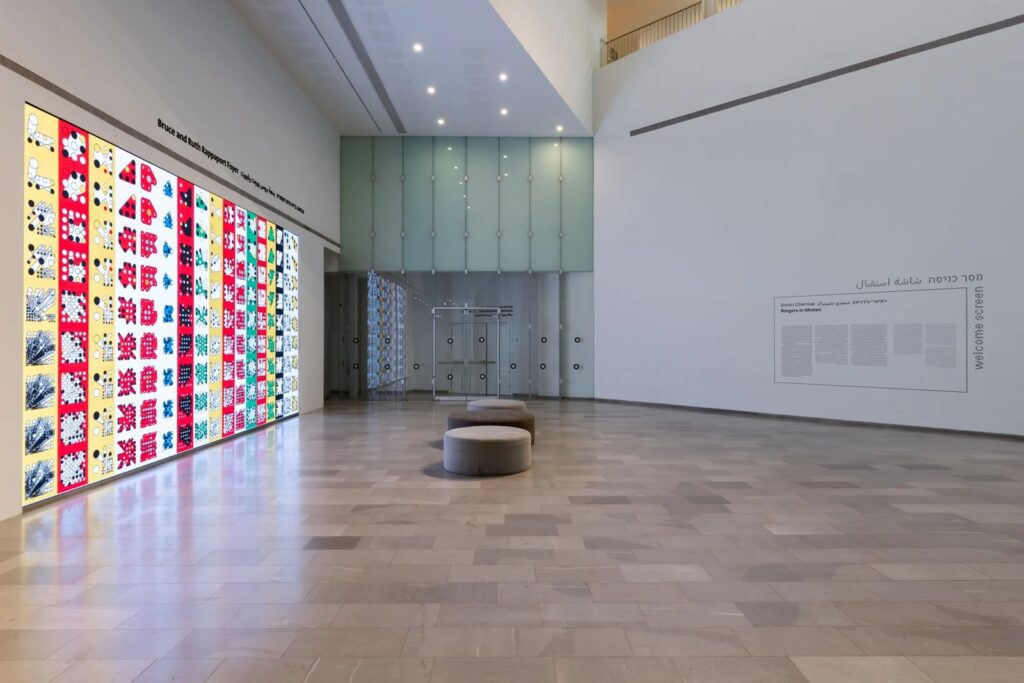
- Where: Bruce and Ruth Rappaport Foyer, Herta and Paul Amir Building, Tel Aviv Museum of Art, 27 Shaul HaMelech Blvd., Tel Aviv.
- When: through Saturday, November 14, 2026. The museum is closed Sundays. Its visit page lists hours of 10:00 to 18:00 on Monday, Wednesday and Saturday, 10:00 to 21:00 on Tuesday and Thursday, and 10:00 to 14:00 on Friday, with last entry one hour before closing. It also notes that on November 4 and 5 the museum closes at 18:00, with last admission at 16:00. Check the page before you go.
- Tickets: regular museum admission is NIS 55, according to the visit page, with listed discounts that require a valid card or certificate.
- From anywhere: open the live artwork in a browser. The project page says the grid adapts to any screen, from the museum wall to a phone, and sound starts with a tap.
- Curator and support: curated by Tal Lanir; the museum credits support from Alan and Caroline Howard.
For more of the artists and collections that shaped NFT culture, browse the Behind the Bluechips series.
Sources
- Tel Aviv Museum of Art: Dmitri Cherniak, Ringers in Motion (exhibition page)
- Dmitri Cherniak: Ringers in Motion project page (scenes, credits, photographs by Daniel Hanoch)
- Dmitri Cherniak: “Ringers in Motion: Strings, Boundaries, and Memory” (essay)
- Dmitri Cherniak: Ringers (collection facts and The Goose)
- Dmitri Cherniak: Ringers #962, The LACMA Iterations
- Dmitri Cherniak: Ringers at Infinite Images, Toledo Museum of Art
- Dmitri Cherniak: Art Basel Miami Beach 2025, Zero 10
- Tel Aviv Museum of Art: opening hours and admission